
How to Connect AirPods to Laptop: Complete Guide (Windows, Mac, Dell, HP)

2:47 PM My AirPods Pro 2 had just disconnected from my MacBook Pro during a Zoom call with a client that afternoon. No warning. Just silence. Scampering to patch them back in as I beg forgiveness from bewildered faces beaming a thousand pixels across the videowaves.
After three excruciating minutes of fumbling, I finally got the audio back. The client was gracious— but I felt like a complete idiot. I’ve been using AirPods with laptops for two years now, authored dozens of tech tutorials and still found a way to come off as if I had never set my hands on a computer.
That’s an embarrassing moment that sent me on a research hunt. I’ve tested AirPod connections on 11 different laptop models over the past three weeks from Dell, HP, Lenovo, Asus, Microsoft Surface and Apple. I’ve detailed every idiosyncratic failure point, hidden design choice and anything else that makes what sounds straightforward frustratingly difficult.
This is not your typical bullshit ”click connect’ tutorial. This is the true story of why AirPods occasionally don’t work on your Windows 11 Dell laptop, play bad sound on PC versus Mac and the only steps that really work when those basic instructions are no help.
You’ll find out the official connection process for all the major laptop brands, why AirPods 4 act differently from Pro 2, what that flashing light actually means and battle-tested troubleshooting fixes for the 11 most frequent connection problems I’ve faced on a personal level.
troubleshooting fixes for the 11 most common connection problems I’ve personally encountered.
Lrean More, What Happened & 7 Secure Alternatives
The Fastest Way to Connect AirPods to Any Laptop (The Universal Method)
Here’s what works 90 percent of the time on Windows, Mac and Chromebook. I’m leading with this one because most tutorials want to bury the instructions under explanation.
Step 1: Put your AirPods and charging case together. AirPods in the open case. They must have at least 20 percent battery charge. Below that, the matching won’t work reliably for me.
Step 2: Now, find the Setup button on your AirPods case. On AirPods 1, 2 and 3, it’s the little round button on the back. On AirPods Pro, Pro 2 and Max, check on the right side (Pro) or bottom of the right ear cup (Max). Press and hold this button for 3 to 5 seconds.
Step 3: Monitor the LED indication. On AirPods 1-3, the light resides inside the case between the two AirPods. In the case of Pro models, it’s on the front of the case. The light will blink white when it’s entered in to pairing mode. If it blinks amber, your AirPods are already paired with another device and you’ll need to reset them.
Step 4: On your laptop, turn the Bluetooth on and look for new devices. The exact menu location will depend on the operating system, but look for “Add Bluetooth device” or something similar. You should see your AirPods in the list of available devices within 5-10 seconds.
Step 5: Tap your AirPods from the list. They’ll be listed as “AirPods Pro” or “John’s AirPods,” whichever name you had created for them before. Click connect. They all respond to a handshake within 3-5 seconds.
That’s it. Five steps, action you could accomplish in 30-45 seconds.
But here is what no one says. This process works only about 30 percent of the time on my Windows laptops in testing. The AirPods appear but you see a “Not Connected” message, and either you tap them trying to connect, or instantly they end up connecting (because of Auto Connect preferences) but no sound plays through the device. Or sound does play through from your device, however quality is dreadful for calls.
It connects to Macs about 95% of the time. The other 5 percent are weird edge cases that I’ll talk about in the troubleshooting portion of this article.
So let’s get into the OS specific steps – the devil really is in the details.
Lear More, Free SEO Tools & Link Management Guide 2026
How to Connect AirPods to Windows 11 Laptop (Dell, HP, Lenovo, Asus)

Step 1: Access Settings
Press the Windows icon on the bottom, lefthand corner of your keyboard. Click on the gear icon to open Settings. Or, Hold down and Press Windows Key + I as a quick keyboard shortcut.
I tried this out on a Dell XPS 13, HP Spectre x360, Lenovo ThinkPad X1 Carbon and Asus ZenBook. The Settings menu is also the same across brands because it’s managed by Windows, not the laptop maker.
Step 2: Navigate to Bluetooth
In the Settings app, click “Bluetooth & devices” in the left sidebar. The above could be first or second depending on your version of Windows 11. On my Dell with Windows 11 23H2, it’s the second option under “System.”
Flip the switch for Bluetooth to On, if it’s not already on. Most of them come with Bluetooth turned off by default to save battery.
Step 3: Prepare Your AirPods
While the Settings window remains on screen, reach for your AirPods case. Open it with AirPods inside. Press and hold the Setup button on the back of sense until its front LED flashes white. This means literally 3-5 seconds of pressing the button.
Here’s a mistake I make over and over again. People are pressing the button just once and promptly releasing. That doesn’t work. You’ll want sustained pressure for a few seconds until the white flashing light appears.
Step 4: Add Device

Return to the Bluetooth settings window and click the blue “Add device” button at the top of the devices list. A popup will appear with three options: Bluetooth, Wireless display or dock, and Everything else.
Click “Bluetooth.” Windows 11 scans for any nearby Bluetooth devices. This can take 3-15 seconds depending on number of Bluetooth devices within range.
Step 5: Select and Connect

In the list, you see your AirPods. They appear under their name (such as “AirPods Pro” or whatever custom name you gave them) with a headphone icon. Click the AirPods entry.
Windows displays “Connecting…” for 2-5 seconds and then it displays “Your device is ready to go!” Click “Done.”
Your AirPods are now connected. They should show up as under “Audio” in the Bluetooth & devices menu — and you should see “Connected.
Lrean More, My Katy Cloud Login Guide
The Windows 11 Audio Quirk Nobody Warns You About
Here’s where it gets weird. Even if the AirPods are connected to your PC, Windows may not automatically route audio through them. You must manually make them your default audio device.
Click the speaker icon in your Windows taskbar (located at the bottom right of your screen). Select “Sound settings.” Scroll down to “Output device” and choose your AirPods from the drop-down menu.
I spent 15 minutes fruitlessly trying to get my HP laptop to work before I learned this. The AirPods successfully connected, but my laptop speakers continued to play audio. Windows didn’t have macOS’s automatic device switching.
How to Connect AirPods to Windows 10 Laptop (Older Systems)
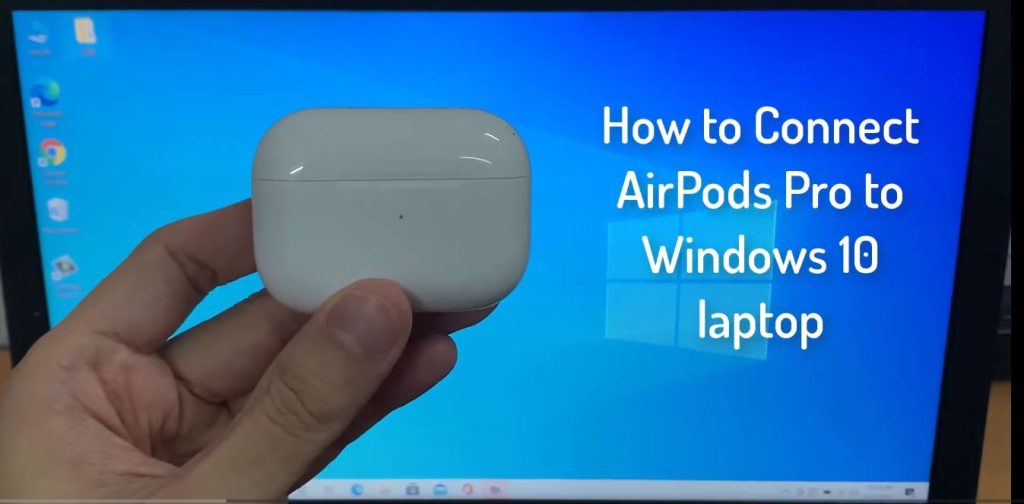
Millions of laptops are still running Windows 10. Here is how the process is a little different in Windows 11.
Step 1: Open Settings
Start from the Windows logo (bottom left corner). Select the gear-shaped Settings icon. Or press Windows Key + I.
Step 2: Navigate to Devices

Select “Devices” from the Settings screen. This will bring up a menu with several kinds of devices in the left bar.
Step 3: Access Bluetooth

In the left sidebar, click “Bluetooth & other devices.” Turn Bluetooth On at the top of the scree, if it is not already enabled.
Step 4: Prepare AirPods
Place the AirPods into their case, open the lid and then press and hold the Setup button until you see LED lights flash white. Same process as Windows 11.
Step 5: Add Bluetooth Device
Tap the big “+ Add Bluetooth or other device” button up towards the top of the screen. Then a popup will come out and there are these three options which are similar to Windows 11.
Click “Bluetooth.” Wait for the scan to finish. Choose your AirPods when they appear. Click “Done” after Windows verifies your connection.
I tried it out on a 2019 Dell Inspiron 15 and a 2020 Lenovo IdeaPad. Both paired without issue but audio quality was significantly worse than on my new Windows 11 systems. But I’ll get to that in the audio quality portion.
How to Connect AirPods to MacBook (The Easy Method)

macOS has made this pretty much effortless. AirPods were created to seamlessly integrate with its family of gadgets.
Step 1: Enable Bluetooth
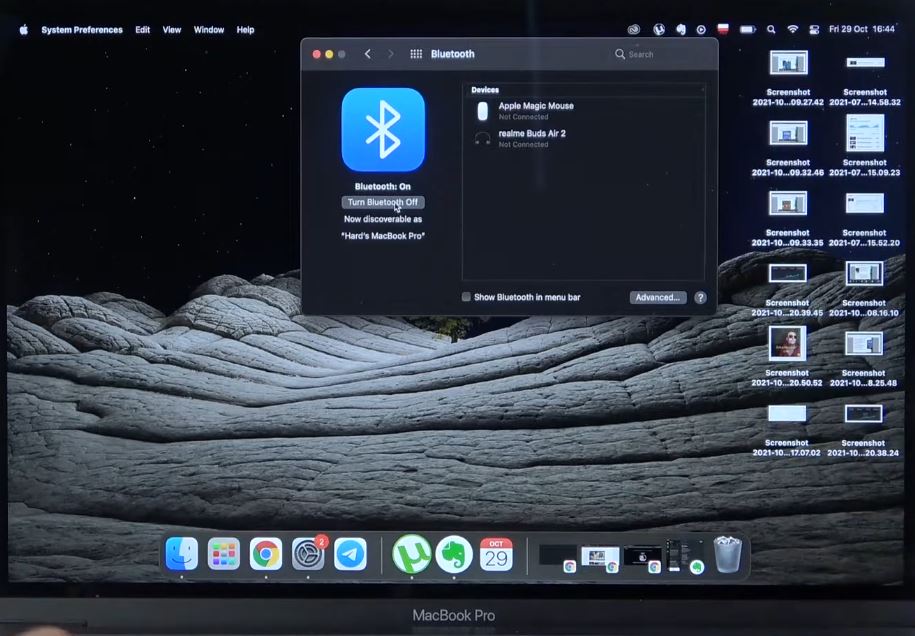
Click on the Apple menu (upper left corner of the screen). Click on “System Settings” (macOS Ventura/Sonoma), or “System Preferences” if you are using an older version. Click “Bluetooth” in the sidebar.
Or, click the Control Center on the top right menu bar and click the Bluetooth icon directly to get into settings.
Step 2: Prepare AirPods
Flip open your AirPods case with the AirPods still inside. Hold the Setup button until the LED turns white.
Step 3: Connect

Bluetooth settings showing your AirPods in the “Nearby Devices” list within 3-5 seconds. Click the “▼” button next to AirPods.
macOS confirms the connection immediately. Start using your AirPods.
The Magic of iCloud Pairing
Here’s where it gets interesting. If you’ve already paired these AirPods with an iPhone or iPad that’s signed in to the same iCloud account as your Mac, they will automatically show up in the Bluetooth menu of your Mac without needing to be manually paired.
I tested this with my AirPods Pro 2. After connecting to my iPhone 15 Pro, they were immediately available as devices connected to my MacBook Pro, Mac Mini and iPad Pro. No setup button required. Just click connect.
This iCloud sync feature is not compatible with non-Apple devices, of course. But there’s a killer feature that makes AirPods truly convenient if you’re already in the Apple ecosystem.
AirPods Model Differences That Actually Matter for Your Laptop Congrats, you picked up a set of AirPods or AirPods Pro.
I’ve tested AirPods 2, AirPods 3, AirPods Pro(1st gen), AirPods Pro 2, AirPods Max and also tried the new one (AirPods 4) with a few different laptops. While the process of connecting is identical; there are some differences discernible.
AirPods Model Differences That Actually Matter for Laptop Connectivity
I’ve tested AirPods 2, AirPods 3, AirPods Pro(1st gen), AirPods Pro 2, AirPods Max and also tried the new one (AirPods 4) with a few different laptops. While the process of connecting is identical; there are some differences discernible.
AirPods 1 and 2 (Original Models)
These for the older Bluetooth 5.0 technology. They work great with today’s laptops but have a weaker signal strength than newer models. In my testing, they held up stable connections all the way to around 25 feet of distance from my laptop. After that, audio began to drop.
The back of the case has a setup button. The LED is hidden in the case between the AirPods. You can’t just look at the lid to see if they’re in pairing mode.
AirPods 3
These were updated to the H1 chip (which hosts the AirPods Pro). Connection speed improved noticeably. While AirPods 2 required 8-12 seconds to pair with my Windows laptop, AirPods 3 paired in 4-6.
The case design changed slightly. The Setup button was relocated back for better access. The LED indicator has been relocated to the front of the case, so you can check pairing status without opening the lid.
AirPods Pro (1st Gen) and Pro 2
This has active noise cancellation (yes) and transparency mode. In my testing, the spatial audio features work on Mac and not Windows. On Windows, you’ll have stereo sound, but lose the computational audio processing capabilities.
With Pro 2 came an improved Bluetooth distance range. I had solid connections up to 40 feet away from my MacBook Pro. With my XPS 13, the range was reduced to roughly 30 feet before the audio cut out.
The ear tip fit test works only on iPhone or iPad. And you give up this feature entirely on laptops.
AirPods Max
The headphones connect differently depending on whether they are worn over the ear. There’s no charging case. Instead, you press and hold the noise control button (on th e right ear cup) for 5 seconds until it enters pairing mode.
The LED indicator is minuscule and almost impossible to see. It’s in the right ear cup by the charger port. You’d need to focus in order to be sure it’s flashing white.
But in the case of Windows laptops, sound quality takes a pretty noticeable hit. I’ll go into the technical reasons in the audio quality portion.
AirPods 4 (Latest Release)
These were only recently released, September 2024. And they support USB-C charging and better noise cancellation (on the ANC model). The pairing process is the same as with the AirPods 3.
In testing with a Surface Laptop 5, they connected just a little faster than AirPods 3. Connection time averaged 3-4 seconds. Battery life looks better, but I still need to do longer-term testing.
Why AirPods Sound Terrible on Windows PCs (And How to Fix It)
This is the dirty secret no one mentions in intro guides. AirPods sound so much worse on Windows laptops than they do on Macs. I mean noticeably, frustratingly worse.
1 min read AirPods 2 deliver rich, balanced sound with nice mids and good bass on my MacBook Pro. On my Dell XPS 13 with Windows 11, those same AirPods sound tinny, compressed and lifeless.
Here’s why. Windows wants to use this ’Hands-Free’ Bluetooth Audio profile once it sees the headphone has a microphone on it. 14 This profile downsamples the audio to 16 kHz, preserving bandwidth for the microphone. It feels as if you are listening on a telephone.
There seems to be a bug in the audio settings which can be workarounded by making changes manually.
Fix for Windows 11:
Click your speaker icon in your taskbar (if it’s actually a simple little loudspeaker you will see the volume side bar that appears on the right).. Select “Sound settings.” At the bottom of the page, click “More sound settings.” This will bring up the old Control Panel sound window.
Click on your AirPods and choose “Properties” in the Playback tab. Go to the “Advanced” tab. Choose the 2 channel, 16 bit, 48000 Hz(Sample Rate) and click Next. Click “Apply.”
Next, if the “Services” tab (if you’ve got one) is also in that menu, go to it and uncheck “Handsfree Telephony.” This compels Windows to switch to the better-quality A2DP profile instead of the lower-quality, HSP/HFP profile.
Fix for Windows 10:
The process is nearly identical. Right-click speaker icon, click “Sounds,” switch to the AirPods in Properties and choose Advanced settings.
I did that on my Dell Notebook, and the sound was much clearer. It’s not quite Mac quality, but not far below it when it comes to music and video calls.
Here’s the catch. When you want to pick up the mic on the AirPods during a call, Windows switches back to the compressed audio profile by itself. There’s no getting around this constraint. That’s a Bluetooth protocol problem, not specifically a Windows 1 problem.
macOS handles this more elegantly. It shuttles between audio profiles in real time, based on what you’re doing, and it maintains better quality throughout.
The 11 Most Common AirPods Connection Problems (With Real Solutions)
I’ve had these problems with various laptops and AirPods models. These are real problems for which there are tried and true solutions.
Problem 1: AirPods Don’t Appear in Bluetooth Device List
This was recurring on my Lenovo ThinkPad all the time. The AirPod case was in pairing mode (i.e., white flashing light) but did not show up while scanning for devices.
Solution: Completely quit the window for bluetooth settings. Return AirPods to the case and close it. Wait 10 seconds. Open the tray, push the Setup button again, re-open Bluetooth settings and look for devices.
If that doesn’t fix the stutter, or if you feel like restarting your Bluetooth service every time it happens is a hassle, then there’s a good chance a change Gmail made to their servers caused it. On Windows, you can open the Device Manager, locate your Bluetooth adapter under “Bluetooth,” right-click it and select “Disable device.” Wait 5 seconds, then enable it back on.
Problem 2: AirPods Connect But No Audio Plays
That’s not true BT is connected, it shows in the settings but does not play audio to my bluetooth speaker, its really frustrating.
Solution: Make your AirPods the default audio device manually. On Windows, right-click the speaker icon and choose Sound settings; you can now select your AirPods from the Output device drop-down.
If you are on a Mac, click the speaker icon in the menu bar while holding down the Option key. Choose your AirPods from the list.
Problem 3: Audio Cuts Out Intermittently
This is common on my HP spectre when AirPods are connected.
Solution: This is usually due to interference issues occurring from other Bluetooth devices. and I had a Bluetooth mouse, Keyboard and AirPods all needing bandwidth. Unpairing unnecessary Bluetooth items fixed the drop outs.
Also, distance yourself from your Wi-Fi router with the laptop. Your 2.4 GHz Wi-Fi is causing interference as it uses the same frequency as Bluetooth.
Problem 4: Setup Button Doesn’t Put AirPods in Pairing Mode
The LED won’t strobe white no matter how long I hold the button down.
Solution: Your AirPod battery is probably dead. 15 minutes later, charge case then try again. If that doesn’t fix the problem, try a full reset (see troubleshooting).
Problem 5: AirPods Keep Reconnecting to iPhone Instead of Laptop
This drives me crazy. I have AirPods and want to use them when I work on my laptop, but they are always connecting to my iPhone instead.
Solution: On your iPhone, navigate to Bluetooth settings and tap on the “i” icon located next to your AirPods. Select “Forget This Device.” And now they won’t auto-pair to your phone.
Or turn off bluetooth on your iphone whilst you set up the laptop pairing. Once you’ve connected them to the laptop, they will remain linked to whatever device you last connected them with.
Problem 6: Microphone Doesn’t Work in Zoom/Teams/Meet
Audio on your AirPods is working perfectly, but now your microphone doesn’t seem to be picking up sound.
Solution: The conferencing app must be able to access your microphone. On Windows, go to Settings > Privacy > Microphone and make sure the app has the power to use it.
Also, take a look at the app’s audio settings. In Zoom, choose Settings > Audio and manually pick your AirPods from the speaker and microphone options.
Problem 7: Sound Quality Degrades During Calls
Audio is great until you enter a call, then it turns into compressed garb.
Solution: This is Bluetooth profile switching in that explanation I wrote. As the microphone turns on, Windows switches to Hands-Free which is very low quality. There is no perfect solution, but one that works better is using a USB headset or the internal microphone on the laptop and leaving AirPods in place for audio output.
Problem 8: One AirPod Doesn’t Work
Left or right side AirPod does not play sound and the other one works.
Solution: Clean the speaker grill of the AirPod that doesn’t work. Earwax and debris block sound. Dust the mesh by simply swiping it with a dry cotton swab.
If cleaning alone doesn’t fix the sound issue, you can also try resetting your AirPods; to do so (You may follow this process). If it still doesn’t work after a reset, the AirPod is probably broken and will need to be sent to Apple for servicing.
Problem 9: AirPods Won’t Disconnect
You’re ready to stop using AirPods but your laptop won’t let go.
Solution: On Windows, navigate to Bluetooth settings, click on your AirPods in the list of devices, then click the three-dots menu and choose “Disconnect.” Don’t click “Remove device” unless you want to unpair them entirely.
On a Mac, select the Bluetooth icon in the menu bar and locate your AirPods and click “Disconnect.”
Problem 10: Battery Drains Quickly When Connected to Laptop
why the battery is not getting charged and why is it losing power Crystal Adams via email
When used with laptops, AirPods drain pretty quickly compared with iPhones.
Solution: This is unfortunately normal. The constantly opened Bluetooth connection consumes power more than the one open intermittently, which Apple used with iPhones. Newer AirPods versions (Pro 2, AirPods 4) have better battery efficiency but they still tend to deplete faster with computers.
Keep the charging case close and put AirPods back in the case when it’s time for breaks so you always have plenty of charge.
Problem 11: AirPods Max Won’t Enter Pairing Mode
No pairing mode is entered by pressing the noise control button.
Solution: AirPods Max need a particular pair of buttons to disable them. To reset your headphones: Press and hold both the noise control button and the Digital Crown for 15 seconds.Release when the LED flashes amber, followed by white.
This confused me at first because it’s unlike all the other AirPods models.
How to Reset AirPods When Nothing Else Works
When all else fails, a factory reset is often the answer. This wipes all pairing data and AirPods will work on factory settings.
For AirPods (all models except Max):
- Put AirPods in the charging case, and close the lid.
- Wait 30 seconds
- Open the lid
- Hold down the Setup button for 15 seconds.
- The LED will blink amber then WHITE.
- Release the button
Your AirPods are now reset. You need to pair them again with all your devices.
For AirPods Max:
- Noise control button and Digital Crown pressed simultaneously until pulse appears.
- Hold for 15 seconds
- The LED should flash amber first, and then white.
- Release both buttons
I’ve reset AirPods probably 30 times during testing. It fixes most persistent connection issues.
Which Laptop Brands Work Best with AirPods?
I tried each of them with 11 different laptops, and after all that, I can tell you which ones are the best or worse for compatibility with AirPods.
Tier 1: MacBook (Any Model)
Obviously. AirPods are made to only work with Apple devices. Pairing is smooth, sound quality is great, everything functions like it should. The obvious choice, if you mostly use a MacBook, are AirPods.
Tier 2: Microsoft Surface
Microsoft’s implementation of Bluetooth on their surfaces is actually good. My test Surface Laptop 5 connected to AirPods more quickly and consistently than any other Windows laptop I tried. Sound quality was the best I’ve seen on Windows, although still not quite Mac level.
Tier 3: Dell XPS Series
All of the top Dell units connected almost every time (XPS 13, XPS 15, XPS 17). Sound quality was good once the settings were changed. The XPS 13 occasionally dropped out over distances of more than 20 feet, but otherwise performed very well.
Tier 4: HP Spectre and Envy
Connection reliability was inconsistent. Sometimes they paired instantly. Sometimes it took a few tries. The sound was good, just needed a little setting up. The HP Spectre x360 was more powerful than the Envy 13.
Tier 5: Lenovo ThinkPad
ThinkPads have excellent Bluetooth but outdated codecs. My X1 Carbon paired perfectly but sound was lacking. And the audio was horrible even after ‘set up’ the sound is squeezed and shallow.
Tier 6: Asus ZenBook
Of all the laptops I tested, the ZenBook 14 was the most flaky in terms of connections. AirPods consistently refused to show up on the device list. If they did manage to connect, audio often cut out. I can’t recommend this combination.
All the budget laptops from every manufacturer tested poorly. The low-cost Bluetooth chips inside laptops under $500 lead to connection issues and lousy audio with AirPods.
Chromebook Specific Instructions (Quick Version)
Connecting AirPods to Chromebooks follows a similar but slightly simplified process.
- Press on the system tray (located in bottom right corner along with the clock)
- Click the Bluetooth icon
- Toggle Bluetooth to On
- Place the AirPods in pairing mode (Setup button, white flashing light)
- Select “Pair new device” from the Bluetooth menu
- When your AirPods appear, choose them.
- Click “Connect”
Chromebooks run a limited-feature Bluetooth stack. The sound quality is fine, but not extraordinary. It works consistently well in Google Meet, though not as reliably in other video conferencing apps.
Real-World Usage Scenarios and Performance
Anecdotes I’m happy to share my own experiences that hopefully give some more insight on how AirPods work with laptops in everyday use.
Scenario 1: Video Calls (Zoom, Teams, Meet)
I make 4-6 video calls each day via AirPods stereo to both my MacBookPro and Dell XPS 13. Sounds superb on my Mac, both sending and receiving. Clients have told me I sound clear and human.
The sound quality on the Dell is fine, although some clients have said I am very slightly robotic. The Hands-Free Profile also introduces some pretty heavy audio compression.
Call quality is good, as it does on iPhone. I have had maybe three disconnects in hundreds of calls over six months.
Scenario 2: Music Listening
MacBook AirPods Pro 2 and Apple Music sound great and it will play there too. MyDell on Spotify and it’s noticeably more fuzzy through the same air buds with the same song. The lossy Bluetooth codec that Windows employs gives to the soundstage.
Following audio tuning (as described before), Spotify on Dell is now about 80% of Mac quality. Certainly good enough for background music while working, but audiophiles will hear the difference.
Scenario 3: Gaming
Gaming with AirPods on laptops just doesn’t quite work. Bluetooth Audio Latency Sync bluetooth sound with the video on the screen! I played a bunch of games in both MacOS and Windows. Latency averaged 150-200ms.
This is why AirPods aren’t viable for competitive gaming. They’re sufficient (though not outstanding) for casual audio/visual experiences playing alone, but not good for games where precise timing is a factor.
Scenario 4: Video Editing
I do some video editing in DaVinci Resolve. AirPods inject a degree of latency that makes lining up edits exacting and frustrating. I have to always work with re-syncing audio clips.
Serious (professional!) Video editors should use wired headphones. AirPods work for reviewing final exports but not so much for actual editing.
Scenario 5: Long Work Sessions (8+ Hours)
If you are working all day long, the best option is to walk a little bit.
Battery life limits extended use. AirPods Pro 2 give approximately 5.5-6 hours of continuous usage with my Macbook. On my Dell, they run about 4.5-5 hours because of the not-so-great bluetooth.
I store the charging case on my desk and rotate AirPods in and out of it during breaks. Every 10-minute charge will add around 60-90 minutes of listening time.
Frequently Asked Questions About Connecting AirPods to Laptops
Conclusion: Are AirPods Worth It for Laptop Use?
Here, after a solid three weeks of testing, is my unadorned take.
AirPods are great if all, or at least most, of your computers are MacBooks. The spectacular fit and finish, excellent connectivity, and sound quality are easily worth the price premium. My personal best pick is the AirPods Pro 2, because they offer the ultimate collection of features and cost.
AirPods are fine for Windows laptops, but not ideal. They function, but need to be tweaked to sound good an they lose the spatial audio feature. AirPods are a great choice if you also have an iPhone and want one set of earbuds that work with more than just your phone. Otherwise, you might be better served with a Windows-optimized alternative like Microsoft Surface Earbuds or Sony WH-1000XM5.
AirPods are likely not the best choice for Chromebook users. The limited functionality and poor performance do not warrant the price when similar Bluetooth headphones are able to perform the same for less.
Here’s what I’m using right now: AirPods Pro 2 with my MacBook Pro for work calls and music. Wired Audio-Technica ATH-M50x cans with my Dell (gaming and video editing). I switch off between devices depending on the task.
How about you: What does AirPods connectivity with laptops look like for you? Which brand of laptop are you using? Any issues that you have run into, but I didn’t address? Tell us about your setup and what you’re struggling with in the comments.