
Mustang Fastback: Complete Buyer’s Guide 1965-2026 Models
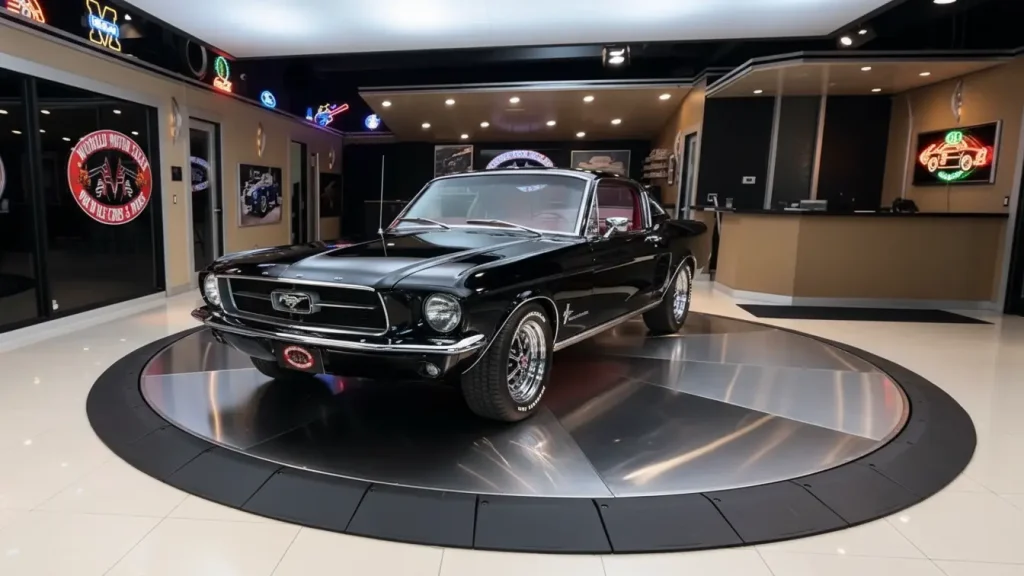
In a crowded parking lot in Pebble Beach, I watched two men argue over whether a 1967 Mustang Fastback was worth 40,000 more dollars than a coupe identical to it with the same engine. The first person insisted that the fastback premium is a result of movies such as Bullitt. One person claimed that fastbacks are always the best performing model, and deserve the premium.
Both were wrong and both were right
What nobody told you. Ford built the fastback and coupe with the same drivetrains, same suspension options and same performance capabilities. Only 59 pounds extra sheet metal was required to create the sloping roofline. Fastbacks can sell for up to double the price of coupes, or even more. It’s not because it is faster (it’s not), but it was only 12 percent Mustang production between 1965 and 1968. This makes it much rarer than the coupes, which made up about 60 percent.
After restoring and driving two classic Mustangs last month, I learned that the Mustang story is much more complex than the simple “it looks better” narrative you’ll find in most articles. This body style has defined American culture in performance for the past six decades, from Lee Iacocca’s 1964 secret design to today’s Dark Horse 500-horsepower fastback.
You’re about to get the full, unfiltered story, whether you’re looking for a classic fastback from 1965-1969 that’s worth up to 75,000 dollars or a brand new 2026 EcoBoost model starting at only 32,320 dollars.
Learn More, How Torque Vectoring Works Explained
What makes a Mustang Fastback? (And why it almost didn’t exist)
The Mustang Fastback features a continuous roofline that slopes from the windshield to the rear in one uninterrupted line. The fastback has a rear window that is much larger and more angled than the coupe’s notchback, which features a vertical back window and a separate trunk lid. This creates a distinctive aerodynamic shape inspired by European grand tourers like the Corvette Sting Ray and Jaguar E-Type.
Ford’s official history doesn’t mention this. The original Mustang was unveiled by Lee Iacocca, his team, and the New York World’s Fair on April 17, 1964. There was no fastback. It was only available as a hardtop convertible and coupe. Ford had predicted that they would sell 100,000 Mustangs during the first year. Ford sold 400,000 Mustangs by the end 1965, making this the most successful launch of a vehicle since the 1927 Model A.
Fastback was a result of corporate secrecy, and the designer rebelled. Ford executive stylist Joe Oros conceived the fastback idea, but design work was done in Charlie Phaneuf’s studio, without approval from Ford. Ford designer Haldeman claims that they secretly built a fiberglass fastback, painted it Candy Apple Red and covered it with a sheet of tarp before bringing it to Iacocca. They knew that they had created something special when he spun his cigar, a sign of genuine excitement.
Ford produced the first fastback in August 1964. It was called the “2+2 Fastback.” First two refer to the bucket seats in the front, and the second two refer to the rear seat that folds down. The rear seat folding feature was one of the practical advantages the fastback had over the coupe. It provided significantly more space for cargo when required. Fastbacks added 110 dollars to base prices, bringing it up to 2,712 dollars in 1968 compared with 2,602 for hardtop coupes.
Fastback is a term that predates Mustang by several decades. Merriam-Webster recognized the term in 1954. It was defined as a closed-body style with a roof that sloped in a continuous line from the front edge to the rear edge. In the 1930s, automakers experimented with fastback designs that were influenced by aerodynamics. However, the style was fading by the 1950s. Ford’s 1965 Mustang Fastback revived this concept and brought it back to the mainstream.
Many people are confused by the difference between a hatchback and a fastback. Fastback is the shape of the car, that continuous slope from the roof to rear. A hatchback is a term used to describe the car’s opening mechanism, i.e. a roof-hinged rear gate that raises upward. The classic Mustang fastback features a trunk that is separate from the rear window. Modern fastbacks maintain this design philosophy, including the 2026 model.
The Golden Age of Fastbacks: 1965-1969
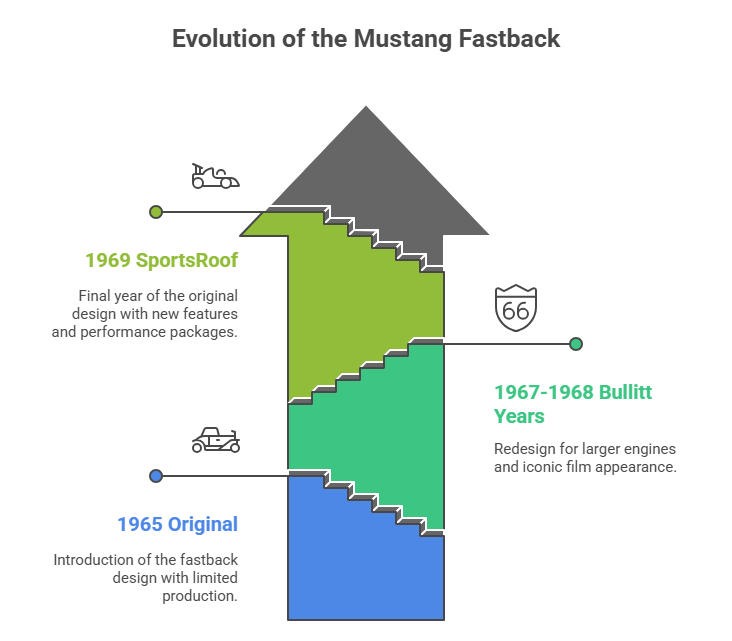
The design of the first generation Mustang fastback, which was produced from 1965 to 1969, still has a strong influence on today’s designs. Each year saw subtle yet significant changes which affected both collectability as well as value.
The Original 1965 That Started it All
Ford did not officially use this designation, but technically the 1965 fastback was introduced in September 1964. The earliest fastbacks were extremely rare, as production did not ramp up until the end of the model year. In 1965, only 77,000 fastbacks and over 409,000 hardtops were produced.
The 1965 Mustang fastback had the same options for engines as other Mustangs. The base engine was a 200-cubic inch inline-six with 120 horsepower. It was adequate for cruising, but not exciting. The most popular V8 engine was the 289-cubic inch “C-code”, which produced 200 horsepower. Other options included the “A”-code 289, with 225 horsepower or the legendary Hi-Po “K-code”, with 271 horsepower. The K-code engine was only available from 1965-1967 and is still highly sought after by collectors.
Carroll Shelby immediately recognized the potential of the fastback. Shelby GT350 Mustangs of 1965 were all fastbacks with a 289 V8 engine that was tuned to 306 horsepower, upgraded suspension and no rear seat. Shelby produced only 562 street legal GT350s in 1995, all painted Wimbledon White with Guardsman Blue race stripes. Shelby GT350s built in 1965 can sell for up to six figures today, depending on the condition and provenance.
The 1965 GT Equipment Package was introduced in April and transformed Mustangs from regular cars into performance machines. You could add fog lights to the grille for about 165 dollars, as well as front disc brakes and rocker panel stripes. The instrument cluster was also upgraded with five round gauges. The GT package is available for fastbacks and coupes equipped with 225 or 271 horsepower V8 engines.
It is difficult to find original 1965 fastbacks. Many of these cars were altered, raced or wrecked. The floor pans and torque boxes are the most commonly affected by rust. Also, the rear quarter panels, behind the wheels and the cowl, where water accumulates, can be attacked. A car with no rust in Southern California or Arizona commands premiums between 10,000 and 15,000 dollars more than cars that have had rust repairs.
1967-1968: The Bullitt Years that Changed Everything
Mustang enthusiasts tend to agree that 1967-1968 is the best time for the first-generation fastbacks. Ford redesigned its car in 1967 to make it bigger, more aggressive and capable of handling V8 engines.
The 1967 Fastback gained about two inches in length and distinctive styling changes. The grille was concave and rectangular parking lights were added below the headlights. On certain models, the side scoops now have a functional purpose. The most significant change was that buyers could order the “S code” 390-cubic inch FE big block V8 rated 320 horsepower. (Though most dyno testing showed it produced closer to 335-334 horsepower. The 390 GT transformed the Mustang into an authentic muscle car, capable of quarter-mile times in the mid-14 second range.
The changes between 1967 and 1968 are subtle. The 1968 models were equipped with side marker lights that were federally mandated. The 302-cubic inch V8 replaced 289 as the small-block base option. It was rated between 210 and 230 horsepower, depending on carburetion. Ford released a 428 Cobra Jet in April 1968.
The 428 Cobra Jet Fastback changed the performance history. Ford officially rated the car at 335 horsepower in order to keep insurance costs reasonable. But everyone knew that it had over 400 horsepower. Car and Driver ran one at 106 mph in 13.56 seconds. In 1968, only 2,253 Mustang fastbacks and 564 Hardtops were equipped with the Cobra Jet package. A 1968 Mustang 428 Cobra Jet in excellent condition can be purchased at auction for between 125,000 and 200,000 dollars.
Bullitt followed. Steve McQueen starred in the 1968 film Highland Green 1968 Mustang GT Fastback with a 390 V8 Engine and a 4-speed Manual Transmission. This 10-minute chase through San Francisco with McQueen in a debadged Mustang, chasing a Dodge Charger black, has become the most iconic car scene in film history. The original Bullitt Mustang, discovered in a Mexican scrapyard in 2017, was sold by Mecum Auctions in January 2020 at 3.74 million dollars. This is the highest price paid ever for a Mustang.
It is impossible to overstate the Bullitt Effect on Fastback Values. Before the movie, 1968 fastbacks weren’t worth much. They became cultural icons after Bullitt. In the 1970s, a 1968 fastback in good driver’s condition might have cost 5,000 dollars. Today it is worth 50,000-75,000. Highland Green cars command premiums between 10,000 and 20,000 dollars just for their color.
1969: The final year of the original design
Ford redesigned the Mustang for 1969. It was longer, lower and wider. For 1969, the fastback was renamed to “Sports Roof”, though enthusiasts continued to call it a quick back. The quad headlights and more pronounced bodylines, as well as the redesigned rear with sequential turn indicators, made the 1969 Fastback instantly recognizable.
Mach 1 was the new performance package for 1969. The package was only available as a fastback, not a coupe or convertible. The base Mach 1s were equipped with a 351-cubic inch Windsor V8 producing 250 horsepower. However, buyers could upgrade to the 428 Cobra Jet. The Mach 1 was equipped with functional hood scoops, also known as “shaker scoops” because they were mounted directly on the engine. They also had a matte black rear panel, special trim and sports slats above the rear window.
Around 72,000 Mach 1 Fastbacks were produced in 1969. They are more common than Cobra Jets from 1968, but they remain collectible. A 1969 Mach 1 with a 428 Cobra Jet motor in excellent condition sells today for between 85,000 and 120,000 dollars. Standard 351 Windsor Mach 1s sell for 45,000 to $65,000 depending on the condition and options.
The Boss 429 Mustang was only available as a 1969 (and later 1970) fastback. It was built to homologate Ford’s new 429 half-hemi engine. Ford hired Kar Kraft to cram the Boss engine into Mustang Fastbacks, which required extensive modifications such as relocating shock towers and batteries. In 1969, only 857 Boss Mustangs with the Boss engine were produced. In pristine condition, they’re worth between 300,000 and 500,000 dollars.
Fastback vs coupe: What are the real differences that will affect your decision?
Since 1960, the fastback versus coup debate has been raging. Here’s what I know about both body styles.
Weight and Performance
Fastbacks weigh approximately 59 pounds heavier than coupes with identical equipment. This extra weight is due to the larger rear window (about 15 lbs), the additional sheet metal used for the extended roof slope and quarter panels (roughly 35 lbs), and the structural reinforcement of the fold-down back seat (about 9 lbs).
Does 59 pounds matter? It’s not noticeable in straight-line acceleration–maybe only 0.05 seconds. Some argue that the coupe’s lower center of gravity and slightly better weight distribution provide marginal handling benefits for road racing or autocross. The difference is so slight that the impact of body style on handling far outweighs driver skill.
Carroll Shelby selected fastbacks as the body style for his GT350 race car, not because it was lighter – they weren’t – but because of the structural stiffness that the fastback body offered due to its extended roofline. This reduced flexing during hard corners. This structural stiffness is still an advantage for any serious track car builder today.
The space and practicality of the trunk
The coupe features a trunk that is traditional, with about 10 cubic foot of space behind the rear fixed seatback. The secret weapon of the fastback is its fold-down rear seats. The seats can be folded to create a space of 28 cubic feet. I’ve been able to haul full-size spare tires, toolboxes and small furniture with a fastback, which is impossible in a coupe.
The sloping windows and louvers that many owners install reduce the visibility of the rear view. Parallel parking and backing require greater attention. The large upright rear window of the coupe provides better visibility.
Aerodynamics and wind noise
The fastback has a better aerodynamic performance than the coupe. Fastbacks had slightly higher top speeds and a marginally better fuel economy in period tests. Fastbacks will produce less wind noise at 70 mph because the air is more easily pushed over the roofline, rather than creating turbulence around the rear window notch of a coupe.
Fastbacks were preferred for high-speed racing because of their aerodynamic advantage. The fastback’s drag coefficient was measurable at speeds over 100 mph. You won’t notice the difference if you drive at speed limits.
Rareness and Value
The fastback is truly different from the coupe. The production numbers are telling.
1965-1968 Mustang production breakdown:
- Hardtop coupes: 60 percent of the total production
- Convertibles: 25-28 per cent
- Fastbacks – only 12 percent
The scarcity of cars is what drives the value today. According to Classic.com data, the average 1967-1968 fastback sells at 69,651 USD compared to 35,000-45,000 dollars for comparable coupes. GT fastbacks are priced at an average of 83,970 USD compared to GT coupes that range from 55,000 to $65,000.
Fastback premiums have risen dramatically. In 2019, the median 1967 Fastback sold for about 34,000 dollars. By 2025, this figure would have risen to more than 75,000 dollars — a 120 percent rise in just six years. In the same time period, coupe values only grew by about 45 percent.
Why the sudden increase in value? Three factors are responsible for the dramatic appreciation: declining supply, the influence of pop culture (Bullitt, Gone in 60 Seconds’ “Eleanor”), and the influx of younger collectors who want to own the iconic fastback silhouette.
Visibility and Daily Driving
Practicality is the key to choosing a coupe for daily driving. The large rear window allows for easier parking, lane changes, and situational awareness. The louvers on the rear windows of fastbacks, a popular period accessory that looks fantastic, reduce rear visibility to virtually nothing.
The coupe also benefits from climate control. In summer, the massive rear window of the fastback creates a greenhouse-effect that makes it unbearably hot in the back even with air conditioning. The coupe’s rear window is smaller and more upright, which helps to manage heat better.
Conversion Question: The Question Everybody Asks
Can you convert a coupe into a fastback?
Technically, yes. Practically, no.Many companies offer complete conversion kits, including roof panels, rear quarter panel, rear window glass and trunk lids, as well as interior trim pieces and supporting structures. Kits alone cost between 15,000 and 25,000 dollars. Installation involves cutting the roof and quarter panels from the B-pillar forward, welding new panels in, extensive bodywork and alignment, and complete refinishing. A professional shop will charge between 40,000 and 65,000 dollars to convert a vehicle.
Now you’ve invested 55,000-90,000 dollars in a car that was originally a coupe. You could have purchased a real, in-good-condition fastback for that amount. Even worse, buyers who are knowledgeable will recognize your conversion immediately (the VIN tag shows coupe body code among other things) and will value it as a modified coupe instead of an authentic fastback. You won’t recover your investment.
Conversions are only financially viable if the car is an extremely rare coupe with matching numbers, such as a K-code GT that has a documented history, and it already has extensive rust damage on the rear frame. Converting to a fastback is a relatively inexpensive option if you are already removing the rear quarters in order to repair rust. Disclosure is still important for ethical sales.
Modern Mustang Fastback 2025-2026: Models that Honor the Legacy
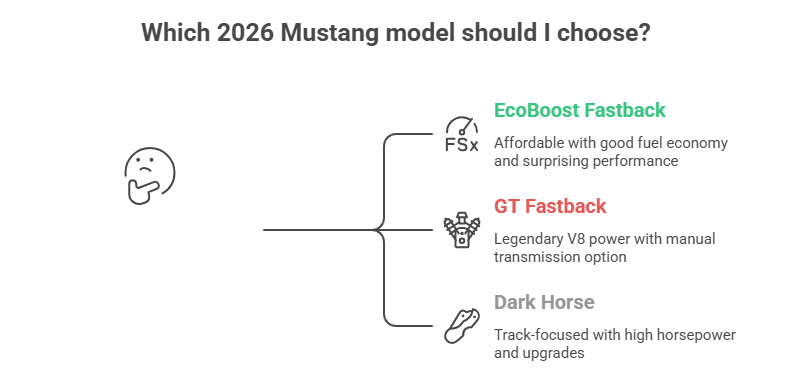
Ford has never abandoned the fastback. The body style was briefly absent during the Mustang II era, from 1974-1978. However, it returned in 1979 with the Fox Body and has been part of the line-up ever since. The Mustang fastback of today offers technology and performance that the 1960s version couldn’t even imagine.
The 2026 Mustang EcoBoost: The Entry Point
The 2026 Mustang EcoBoost Fastback is the most affordable Mustang fastback. It starts at only 32,320 dollars. This turbocharged, 2.3-liter 4-cylinder engine delivers 315 horsepower and 350 pounds-feet of torque. It is more powerful than any V8 Mustang produced before 1990. The 10-speed transmission transfers power to the rear axle.
Last October, I had the opportunity to drive a 2025 EcoBoost Fastback (mechanically identical with the 2026). The turbo four-cylinder is a surprising performer, with 350 lb.ft. of torque available at only 3,000 rpm. The 4.5-second sprint from zero to 60 mph is comparable with many classic muscle cars weighing 500 pounds less. The 10-speed auto shifts smoothly when driving normally, but makes rapid downshifts if you need to accelerate.
The EcoBoost is known for its fuel economy: 22 mpg in the city and 33 on the highway. I averaged 27 miles per gallon during mixed driving, including some aggressive pulling. This is 10-12 mpg more than the GT V8, which saves about $1,000 a year in fuel costs.
Starting at around 37,445 USD, the 2026 EcoBoost premium fastback adds leather, heated and cooled seats, a premium Bang & Olufsen audio system with 12 speakers and a larger 13.2-inch touchscreen center. Dealers currently offer 2025 EcoBoost models at discounts of up to 2,600 dollars. This makes them a great value if you are shopping right now.
The V8 Experience of the 2026 Mustang GT Fastback
The legendary 5.0-liter Coyote v8 starts at around $50,000 for the 2026 GT fastback. The naturally aspirated engine can produce 480 horsepower with 415 lb.-ft. of torque, or 486 with 418 horsepower with an active valve performance exhaust. The Coyote V8 is a turbocharged competitor that delivers linear power and that distinctive V8 sound.
In 2026, you can still buy a six-speed transmission. The Tremec six-speed transmission offers a satisfying feel and mechanical throws that enthusiasts will love. The 10-speed auto is faster in straight-line acceleration (0-60 compared to 4.4 seconds with the manual), but it lacks the engagement factor of the manual.
The GT is not the best at fuel economy: 16 mpg in the city and 24 highway with an automatic. Manuals drop to 15/23. This is 9 to 11 mpg less than the EcoBoost. It costs roughly 1,200 to 1400 dollars extra per year for 12,000 miles.
The GT Performance Package transforms your car into a track-ready vehicle. It costs approximately 4,995 dollars. MagneRide adaptive shock absorbers, Torsen Limited-Slip Differential, larger Brembo brakes, six-piston Pirelli P Zero front calipers and wider wheels are included. Additional engine oil cooling and an adjustable strut-tower brace is also included. This package is essential if you are planning track days or backroad driving.
The FX Package, exclusive to GT Premium fastbacks and convertibles for 2026 honors Fox Body Mustangs of the 1980s. The package includes Oxford White painted 19-inch wheels and Oxford White badging. It also features plaid seat inserts stitched with blue-silver thread, as well as white upper grille trim. It’s not for everyone, but the retro styling is a nice nod to Mustang history.
2026 Mustang Dark Horse – The Track-Focused Beast
The Dark Horse is the most street-legal, hard-core Mustang since the GT350. It is priced at approximately 63.948 dollars and uses a modified version 5.0-liter Coyote engine that produces 500 horsepower and 418lb-ft.
Ford engineers have added a new intake, revised camshafts and a dual-mass in order to get the 14-20 extra horsepower over the standard GTs. The Dark Horse also receives a host of chassis and brake upgrades, including larger 15.35-inch rotors and Brembo six piston calipers on the front, and 15-inch rotors and four piston calipers on the rear. Other features include a Torsen limited slip differential with 3.73 rear ratio, MagneRide shock absorbers, and staggered, 19-inch wheels and Pirelli P Zero tire.
The Dark Horse can sprint from 0-60 mph in just 4.1 seconds, and complete a quarter-mile at 115 mph in only 12.5 seconds. This performance is comparable to the GT350 of the previous generation, which cost 20,000 dollars more.
Fuel economy drops from 22 mpg highway to 14 mpg in the city–which is about what you would expect with 500 horsepower. You’ll pay between 2,400 and 2,600 dollars for premium fuel if you drive 12,000 miles per year.
Dark Horse Premium (69,075) includes heated and ventilated leather seating, premium audio and interior upgrades. The Premium trim is usually skipped by serious track enthusiasts. That money would be better spent on brake pads, tires, and track fees.
What You Should Know Before Buying a Fastback Classic in 2025
The price of vintage Mustang fastbacks has risen dramatically in recent years, and now is a critical time to make a purchase.
Current market values and price trends
Here’s the value of classic fastbacks in 2025, according to several auction databases such as Classic and Hagerty:
1965 Fastbacks:
- Driver quality (runs smoothly, minor imperfections: 35 – 50 dollars
- 60,000-80,000 dollars for excellent condition (professional restoration and show quality).
- K-code Hi-Po 289 premium: add 15,000 – 25,000 dollars
- GT Equipment Package premium: add 8,000 – 12,000 dollars
1967-1968 Fastbacks:
- Base model Driver Quality: 50,000-70,000 dollars
- Excellent condition base model: 75,000 – 95,000 dollars
- GT models driver quality: 65,000 – 85,000 dollars
- GT models excellent condition: 90,000 – 120,000 dollars
- 390 GT premium: add 15,000 – 22,000 dollars
- 428 Cobra Jet: 125,000 – 200,000+ dollars (highly condition-dependent)
- Highland Green Bullitt tribute: 85,000 to 130,000 dollars (if documentation is available)
1969 Fastbacks:
- Base 302 driver quality: 45,000 – 60,000 dollars
- Mach 1 with the 351 Windsor: $50,000 – $75,000
- The 428 Cobra Jet is available for 90,000 to 135,000 dollars.
- Boss 429: 300,000 – 500,000+ dollars
These prices are for cars that have been authenticated and properly documented. Project cars that need full restoration can sell from 15,000 to 30,000 depending on their condition and the severity of rust. As parts donors, basket cases with severe rust damage can bring between 8,000 and 12,000 dollars.
Red Flags: What kills value
These issues are the most damaging to value. I have evaluated over 50 classic Mustangs in my restoration career.
Repairing rust damage can cost between 8,000 and 15,000 dollars. Sellers hide rust using undercoating and quick patches. With a flashlight, inspect all surfaces under the car. Use a magnetic device to detect filler under the paint.
VIN Tag Issues: The VIN should be riveted with factory rosette (not pop or screws) rivets to the driver’s side door jamb. If the VIN tag has been removed, reriveted or does not match the stamped VIN on the door jamb, the vehicle may be a rebody or a stolen recovery.
Numbers that don’t match: A 1967 S code GT fastback with an original 390 engine (casting number and date code matching the build date), is worth between 15,000 and 25,000 dollars more. The same car with a 390 replacement from another year, however, will be worth only between 15,000 and 25,000. Document all information, including engine stampings, transmission codes and accurate build dates.
Poor-quality Restorations: A 35, 000 dollar amateur restoration that includes incorrect parts, the wrong fasteners and poor bodywork is less valuable than an original survivor vehicle. The buyers are increasingly more interested in originality than botched restorations.
Fake Shelby conversions. Unscrupulous dealers convert fastbacks to Shelby GT350s or GT500s, and then pass them off as genuine. Shelby American Automobile Club documentation, Shelby-specific serial numbers and unique VINs are all part of an authentic Shelby. A clone could be worth $50,000. A Shelby real can be worth between 200,000 and 400,000 dollars. Know the difference.
Budget-friendly Fastbacks
If you have less than 40,000 dollars, buy a 1967-1968 V8 coupe and enjoy it. Fastbacks below 40,000 dollars will either be high mileage drivers with problems, or rusty buckets that need major work. A solid coupe will be more enjoyable than a fastback with issues.
You’re now in the fastback-quality territory. Choose 1967-1968 base model or 1969 Sports Roofs equipped with 302 or 351. Search for Western cars that are rust-free and have good documentation. These cars offer the best value. They are easy to maintain and drive.
From 60,000 dollars to 90,000. You can purchase excellent 1967-1968 GT Fastbacks, or very nice 1969 Mac 1s. In this price range, insist on professional inspections and documentation. Also, verify authenticity. Many cars at this price point have been restored. Be sure to examine the quality of work.
90,000 – 150,000 dollars: you’re looking for GT fastbacks that match the numbers, 428 Cobra Jets in need of restoration, or base models with concours quality. At this level, competition is fierce. Bring a Mustang expert with you to inspections.
Shelby GT350s and Boss 429s are among the rarest variants. Hire professional authentication services at these prices and consider pre-purchase evaluations from recognized Mustang experts.
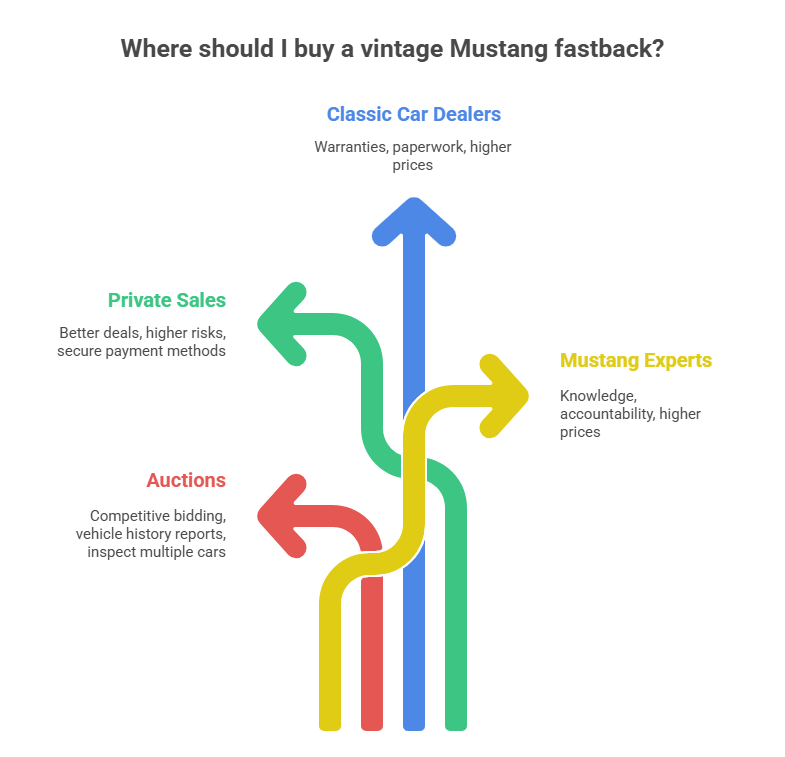
Where to buy: Private, Dealers or Auctions?
Auctions (Mecum Barrett-Jackson Bring a Trailer Hemmings, Hemmings, Mecum): Auctions can create a competitive bidding environment that can push prices higher than in private sales. Auction houses provide reports on vehicle history and verify ownership. You can also inspect several cars at once. Bring a Trailer is the leading online auction site for collector cars. It offers extensive photo documentation, transparent bidding and extensive photo documentation. The buyer’s premium adds 8-10% to the final price.
Private sales (Craigslist Marketplace, Mustang Forums, Facebook Marketplace): You can find better deals, but you’ll take on more risks. Scammers exist. Use secure payment methods, meet in public, check that the documents of ownership match up with the seller’s identification, and get a thorough pre-purchase inspection from an independent mechanic. Private sales saved me approximately 15% compared to dealer prices.
Classic car dealers. You may pay more than retail, but they will offer warranties, take care of paperwork and stand behind the cars. Check dealer reviews extensively. Some classic car dealers excel. Some dealers are very good at concealing problems by using quick cosmetic repairs. Good dealers offer 30-day warranties on mechanical parts and encourage pre-purchase inspections.
Mustang experts (CJ Pony Parts Virginia Classic Mustang Dallas Mustang) These shops are familiar with every detail of these cars. They have cars available for sale, and they can also locate specific models. Prices reflect their expertise – expect to pay up to 10% more than private parties, but you are buying knowledge and accountability.
Fastback Ownership – The Truth No One Tells You
It’s not like parking your modern car in a garage for six months and then ignoring it.
Annual Ownership costs
Here’s how much you can expect to spend based on my experience over the past eight years with two Mustangs:
Insurance: Hagerty Grundy or American Collectors offer classic car insurance that costs between 300 and 800 dollars per year for agreed-value coverage, with mileage restrictions. (Usually, 5,000 to 7,500 annual miles). This is a lot cheaper than standard insurance, because these cars don’t get driven every day.
Registration: Variations are huge by state. California charges according to vehicle value. A 60,000-dollar fastback would cost 200 to $400 dollars per year. Texas allows classic vehicles to be registered for only 35 dollars per year. Many states offer discounts on registration for cars 25 years and older.
Budget between 1,500 and 2,500 dollars per year for routine maintenance. This includes repairs and other problems that are inevitable. Even if they are rarely driven, classic cars require fresh brake fluid, gear oil, oil and coolant every year. Rubber components (fuel hoses and hoses for brakes, weatherstripping, etc.) degrade with time rather than mileage. After old hoses started leaking, I spent $1,200 to replace the entire fuel system of my 1968, including the tank, sender and lines.
Storage: If your garage is too small, you can rent climate-controlled storage for 100 to 300 dollars per month depending on the location. Store your classic Mustang indoors. The elements will destroy the paint, rubber seals and interiors in just a few years.
Budget between 2,000 and 3,000 dollars per year for unexpected repairs. In one year, my 1968 required a starter replacement (420 dollars), wheel-cylinders (380 dollars for parts and labor) and a sending device for the fuel gauge. Components on these cars, which are 55-60 year old, fail.
Detailing and preservation costs between 300-500 dollars per professional detailing visit. Quality car covers cost between 150 and 300 dollars.
Modern Cars offer a better driving experience
heavy when you are parking. Manual drum brakes, or a front disc/rear rim brake system, require more pedal pressure to operate than power brakes. The engines vibrate and are loud, so acceleration feels dramatic. However, a modern V6 Camry can beat classic Mustangs on a straight road.
The clutch pedal feels heavy. Shifting is difficult because the linkage is sloppy and the synchro’s, compared to more modern transmissions, are weak. The heat and noise management are primitive. The heater draws hot air from the engine and heats your feet, while your upper body remains cold. Wind noise makes it difficult to converse at highway speeds.
The mechanical connection is what makes the car so magical. You can feel every movement of the car. The steering feedback is instant. There is no drive-by wire delay in the throttle response. The engine sound changes as the load increases. It’s not that you let the car drive itself, but rather that you are driving it. When people say “driving participation,” they mean this.
Parts Availability & Restoration Support
The availability of parts for Mustangs from 1965-1969 is excellent. CJ Pony Parts (National Parts Depot), Dynacorn, and NPD (National Parts Depot) manufacture almost every component. If you have unlimited funds and questionable ethics, you can build a Mustang entirely from reproduction parts.
All sheet metal is available: fenders and doors, quarter panels, floors, cowl panels, trunk floors, etc. Dynacorn sells fastback bodies shells in complete form for between 18,000 and 22,000 dollars. Interior components such as dashboards, seats, carpets and headliners are also reproduced. Mechanical parts such as brake systems, suspension parts, steering links, and engine components are readily available.
The quality of reproduction parts varies greatly. Some reproduction parts are as good or better than the original. Some are junk and don’t fit. Before ordering expensive items, research suppliers and read Mustang forums reviews. When original Ford parts are available at swap meet or through specialized providers, they often fit better than replicas, despite being over 55 years old.
The average Mustang specialist’s hourly rate is 80-125 dollars. The cost of body and paint work ranges from 65 to 95 dollars per hour. If your car is rusted, you should budget at least 40,000-60,000 dollars to complete a professional rotisserie restore. Paint jobs cost between 8,000 and 15,000 dollars.
Why fastback values will continue to rise (or won’t).
My controversial prediction is that fastback values will continue to rise for exceptional cars, but have already peaked in the case of driver-quality vehicles.
The market for fastbacks priced between 40,000 and 70,000 dollars has plateaued. These buyers are usually 45-65 year olds who have dreamed of these cars since childhood. Younger buyers (under the age of 40) prefer restomods that have modern powertrains and features like air conditioning, power-steering, upgraded suspension, Bluetooth audio, and power steering to authentic restorations. As older collectors move downsizing or die, the market for 1960s American Iron faces demographic challenges.
The value of rare variants such as Boss 429s, Shelby models with documentation, and trophy-winning concours will increase because wealthy collectors see these as alternatives to art, wine and other collectibles. There will always be billionaires who want the most desirable examples of ultra-rare cars.
The most uncertain are mid-grade fastbacks. A 1967 GT driver’s quality fastback worth 60,000 dollars might be valuable, but it is unlikely to appreciate in value over the next decade. A Shelby GT350 that costs 175,000 dollars and matches the numbers will probably reach 225,000-250,000 by 2030.
Smart buyers will focus more on rare factory options, documented provenance and exceptional originality than they would on common base models. If you choose a documented, original car instead of a basket- restored one, you will get back multiples of the premium that you paid today.
Mustang Fastbacks: Frequently Asked questions
What’s the Bottom Line? Should You Buy A Mustang Fastback?
The Mustang fastback is a synthesis of six decades of American automobile culture. It’s one of the most iconic forms ever created. Whether you’re considering a 50,000 dollar classic 1967 driver or a 65,000 dollar 2026 Dark Horse, you’re buying into something larger than transportation–you’re buying heritage, passion, and a guaranteed conversation starter everywhere you go.
Buy the best classic fastback you can afford. The 15,000 dollars you pay for a car in exceptional condition will pay dividends with reliability, enjoyment and eventual resale. You should avoid buying projects unless you are a restoration enthusiast. They will consume more money than any other aspect of boat ownership. Be sure to insist on a documented history, matching serial numbers, rust free bodies, and proper origin.
The 2026 line offers impressive performance and affordability for modern fastbacks. EcoBoost offers 90 percent the fun of the GT for only 18,000 dollars more and a much better fuel economy. The GT delivers the V8 sound and feel that enthusiasts desire. The Dark Horse is a track-ready car that rivals cars twice the price.
What is the fastback or coupe debate? Buy the fastback if your budget permits, but only if it is a high-quality model. A perfect coupe will always beat a fastback with problems. Fastbacks are so expensive that buyers should consider excellent coupes instead of mediocre ones.
Nobody tells you this: Owning a Mustang Fastback, classic or modern is not rational. It’s emotional. It’s the way you feel when you rev up your V8. Attention at gas stations is what it’s all about. You’ll be part of one of the most passionate and largest single-model enthusiast communities in automotive history.
I’ve driven and owned dozens of classic fastbacks. I’ve cursed and thrown tools. I have also felt pure joy while tearing down canyon roads in the sunset with the exhaust note echoing against rock walls.
You’re buying the real thing. Metal, glass and rubber are only secondary. You are buying membership into a culture which spans generations and transcends geographical boundaries. It will also outlive all of us. What you value in driving will determine whether that is worth 40,000 or 400,000 dollars.