
GST Dates 2025 Canada: Payment Schedule & Eligibility Guide
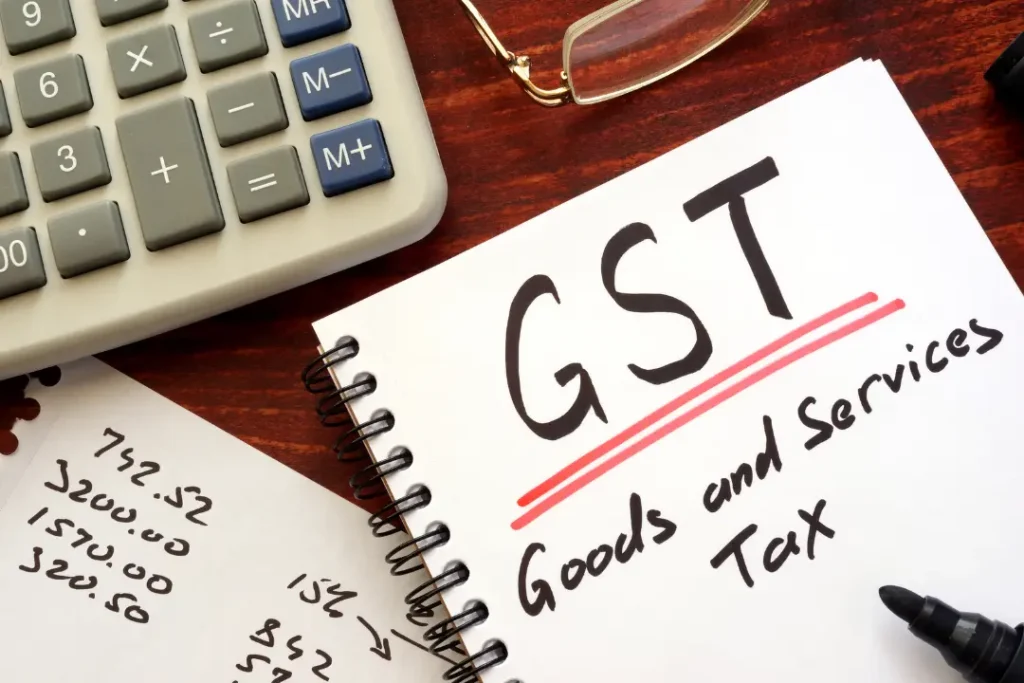
Diana, my neighbor, knocked at my door on Friday afternoon with her mobile phone. “I thought that the GST payments had arrived today, but there’s nothing in my account. Was I mistaken? “Are the dates different for this year?”
We sat with a cup of coffee and accessed her CRA account. She was searching for her January 3 payment, but it had already been delivered on January 3, 2025. She had confused the date for her child benefit, which is paid on a different schedule.
It’s a common misunderstanding. I’ve been asked many different questions about the GST in 2025. Over the last six months, I’ve heard from more than a dozen people, including friends, colleagues, and family. The GST/HST payment schedule changes depending on the tax year you are calculating your payments from. Amounts change every year with inflation and eligibility rules can be confusing to even financially savvy Canadians.
You need accurate, current information from Canada Revenue Agency if you are searching for “GST payments 2025 Canada”, or “GST dates Canada 2025”. This comprehensive guide includes everything: the exact payment dates of 2025-2026. It also covers how much you will receive depending on your family size and your income.
What is the GST/HST credit and why does it matter?
The GST/HST Credit is a quarterly tax-free payment that helps low- and moderate-income families and individuals offset the federal tax they pay on their purchases throughout the year.
The Canada Revenue Agency administers the credit, which provides four payments per year based on income, family size, and number of children below 19 years old in the household. This benefit is non-taxable. You do not report it on your tax returns and it does not affect any other benefits or credit you receive.
In 2025, maximum amounts for singles are $533, married couples or common-law partners $698, and each child below 19 is $184. These amounts may seem small compared to other benefits, such as the Canada Child Benefit. However, for many families, these amounts add up to more than $1,000 per year. This money can be used to pay for groceries, utilities and transportation.
Since 2018, I have personally received the GST/HST Credit every quarter. The $132 I receive every quarter as a freelancer on a variable income has been used to cover everything from car repairs and birthday presents when clients were late with their payments. It is predictable income that I can count upon, and this predictability is as important as the dollar amount.
In some jurisdictions, the credit includes programs related to provincial and territorial programs. Ontario residents receive, for example, the Ontario Energy and Property Tax Credit, Northern Ontario Energy Credit, and Ontario Sales Tax Credit in combination with their federal GST/HST payments.
Lear More, What’s left vs. what continues?
Dates of GST/HST credit payment for 2025-2026
Budgeting requires that you know the exact schedule of payments. The Canada Revenue Agency releases quarterly GST/HST credits on the fifth day of January. April. July. and October. If the 5th is a federal holiday or a weekend, the payment will be made on the last working day before the 5th.
The dates of the GST/HST Credit Payments for 2025-2026 are confirmed:
Payment was made on Friday, July 4, 2025, because the 5th fell in a Saturday month. October 3, 2025, was a Friday. The 5th was a Sunday.
This pattern is followed, but most people overlook the fact that the tax year for calculating your payment amount changes mid-cycle. This can cause confusion, and explain why your payment in July may differ from that of April despite the fact that your circumstances have not changed.
The CRA calculated the amounts for the January 2025 payment and the April 2025 payment based on the 2023 tax returns (filed in 2020). The CRA began using your 2024 return for the July 2025 payments. If your income has changed dramatically between 2023-2024, then your July payment may be higher or lower.
I lost income in 2024 as compared to 2023 because Q1 was slow. The CRA recalculated my payments based on the lower income I had in 2024. I didn’t expect the increase, and at first thought it was a mistake before realizing that the tax year had changed mid-year.
Your bank statement will show the deposit as “GST/HST credit” or “Canada FPT” (Federal-Provincial-Territorial) depending on which financial institution you use. The deposit will show as “GST/HST credit” or “Canada FPT” (Federal-Provincial-Territorial) on your bank statement.
If you don’t have a direct deposit set up and are receiving payments via cheque, the checks will be mailed to you on the date of payment. Delivery usually takes between 5-10 days, depending on where you are and the processing time of Canada Post. They are less convenient, slower and more secure than credit cards (they can be stolen or lost).
A special rule applies to small payments. If your total GST/HST for the year is less than $50 per quarterly (meaning less than $200 annually), then the CRA will not send you quarterly payments. You’ll instead receive a lump-sum payment for the whole year in July.
Learn More, Truth About Fake Claims & Real Benefits | CRA
Who is eligible for the GST/HST credit in 2025?

To be eligible for the GST/HST Credit, you must meet certain criteria. The GST/HST Credit is automatically assessed when you submit your annual tax returns, unlike some benefits which require a request.
The CRA will only issue payments to residents of Canada. This includes Canadian citizens, permanent residents (including those with approval-in-principle from Immigration, Refugees and Citizenship Canada), temporary residents (international students, work permit holders, temporary resident permit holders), and refugees or protected persons.
You must be 19 years of age. There are some exceptions for those under the age of 19. If you or your spouse, common-law partner or parent lived with the child in the past or currently you can still qualify.
Even though he lived at home with my parents and did not have any income, my younger brother received the first GST/HST payment the quarter following his 19th birthday. The CRA automatically determined that he was eligible because he filed his 2024 return in April 2025, reporting zero income. The $133 payment he received in July 2025 arrived on time.
Even if you have no income, you must still file a 2024 tax return to be eligible for payments between July 2025 and June 2026. Many people are caught by this requirement, including students with no income and seniors on Old Age Security. It is also a problem for newcomers who don’t know the Canadian tax filing rules. As the CRA can’t calculate your benefit without processing your tax return, filing is a must regardless of your income.
The income thresholds will determine if you are eligible and the amount you get. Income-tested means that the credit reduces or phase out completely as income increases. The phase-out begins for the 2024 year-base (affecting payments between July 2025 and June 2026) when the adjusted family net income reaches approximately $45,000-$50,000 for singles, and $50,000-$55,000 in families. However, exact thresholds vary depending on the size and composition of the family.
You will not receive a credit if your family’s adjusted net income is excessive. This is calculated automatically by the CRA based upon your tax return. There’s no need to take a separate test.
Certain situations are subject to special rules. If you are confined in a prison, or other similar institution, for 90 days or longer during the quarter, then the credit is not available. You can also not receive credit if a child isn’t living with you, because they are in foster care or maintained by an organization. However, you can get credit if you take care of a child under a program for close relationships or kinship.
What you’ll receive: GST/HST credit amounts for 2025

Your family composition and your adjusted net family income will determine the amount of money you get. These amounts are adjusted annually by the CRA for inflation. They therefore increase a little each year. In July 2025 the amounts will have increased by 2.7%.
Maximum annual amounts for the payment period of July 2025 through June 2026, based on your tax return from 2024 are: Married couples or individuals without children: $698 per year ($174.50 per quarter)Each child under the age of 19: $184 per year ($46 per quarter) First child born to a family with a single parent: $184 per annum ($46 each quarter)
Here are some real-life examples to illustrate how it works.
Example 1: Single adult, no children
Jordan, 25, is single with no children and will earn $32,000 by 2024. Jordan’s GST/HST Credit is $533 per year, which is paid out as $133.25 each quarter on January 5,April 5, July 5 and October 5.
Example 2: Married couple, no children
Alex and Sam have no children. In 2024, their combined income will be $48,000. The couple receives $698 per year, which is paid out as $174.50 each quarter. The payment is only made to one spouse (whoever filed the first) but the amount remains the same.
Example 3: Married Couple with Three Children
Maria and David are parents to three children, ages 6, 9 and 14. The couple’s combined income in 2024 was $52,000. The credit for the couple is $698 + $552 (three kids at $184 each), which equals $1,250, payable as $312.50 per quarterly.
Example 4: Single Parent with Two Children Taylor is a parent who has two children aged 4 and 11. Taylor made $38,000 in 2024. The credit for a single person is $533 + $368 (two kids at $184 each = $901) and paid out as $225.25 a quarter. If your family’s adjusted net income is higher than certain thresholds, the actual amount that you receive could be less. As income increases, the credit decreases until it is completely eliminated at higher income levels.
If you are eligible for Canada Child Benefit, your child will be automatically registered to receive the GST/HST Credit. If you become primarily responsible for caring for a new child, register them by applying for the Canada Child Benefit using the Automated Benefits Application (for newborns registered through provincial/territorial birth registration), the “Apply for child benefits” service in CRA My Account, or by submitting Form RC66, Canada Child Benefits Application.
Important Note about Children Turning 19: Your credit for GST/HST will be automatically recalculated in order to exclude any child who turns 19 during the calendar year. This adjustment is made in the quarter following the child’s birthday. The child will then be able to receive their own GST/HST as an individual, but only if they submit their own tax returns.
Kristin, the daughter of my friend Cameron, will be 19 years old in August 2025. Cameron’s payment for October 2025 was automatically reduced by $46, because Kristin has aged out. Kristin, however, filed her 2024 tax return in April 2025. She received her individual credit of $133.25 beginning in October 2025.
The CRA offers an online benefit estimator that calculates your GST/HST credits based on the specific circumstances of your situation. It’s accurate to within a few bucks every time I’ve used the calculator when assisting friends with their estimated payments.
How to check if you’re receiving GST/HST payments
The CRA offers several options to verify payment details or to determine if you are eligible for the GST/HST Credit.
Logging into CRA My Account is the easiest way to access personal tax information. Navigate to “Benefits and Credit Information” once logged in to view your GST/HST status, payment amounts and upcoming payments. You can view all of your past payments by viewing your payment history.
It’s important to check your account quarterly. I usually do this the day before the payment date. This takes only 30 seconds, and it prevents the “Did you pay me?” My neighbor Diana was confused.
The CRA will have sent you a notice of GST/HST credits in July 2025. This notice will show you how much money you can expect to receive over the entire payment period (July 20,25 to June 20,26) as well as which data from your tax return has been used to calculate this amount.
The most common cause of not receiving benefits when you believe you qualify is that you haven’t filed your tax return. You must still file even if you don’t have any income. The CRA cannot assess your eligibility until your return has been processed.
Second, income levels that exceed eligibility thresholds. You will not qualify if your adjusted 2024 family net income exceeds the threshold, regardless of whether you have filed a return. If this is the case, you will receive a CRA notification explaining why payments are not being made.
Some less common issues are not being a Canadian Resident for tax purposes, not being 19 years old and not meeting special eligibility requirements, or your payment being applied to outstanding CRA Debts.
Wait 10 days before contacting CRA if payments do not appear as scheduled. Short delays can be caused by processing delays, bank holidays or postal problems (for cheques). Call the CRA 1-800-387-1193 after 10 business days to inquire.
My uncle called the CRA immediately after April 4, (the date of payment) when he didn’t get his payment for April 2025. The CRA agent instructed him to wait for 10 business days, as required. The payment had not arrived after he waited and checked twice. After a waiting period the agent found that his direct deposit details had been outdated due to the merger of his bank accounts. The agent updated his banking information, and the payment was received on the next scheduled payment date.
What to do if your life situation changes

If your financial or family situation changes, you may need to adjust the amount of GST/HST that you receive. You must inform the CRA of any changes to your family or financial situation so that they can recalculate your benefit. Changes in your life that can affect your credit score include:
Changes in marital status
Your GST/HST credits will be recalculated if you divorce, separate or marry. If you marry or enter a common-law relationship, the amount for both couples is only paid to one spouse. If you were both receiving separate payments before you got together, you’ll need to pay back any overpayments you received.
The CRA must be notified by the end of the month following that in which your marital status has changed. You can update your marital status using CRA My Account, by calling 1-800-387-1193 or by submitting Form RC65.
A very important rule is to not report a divorce until you have been separated from your partner for 90 days. Separation must be caused by a breakdown in the relationship, and not a temporary situation like commuting for work or medical treatment.
Changes in the number of children:
Your credit amount will change if you adopt a new child, have a baby or stop living with a child. You can automatically register new children for the GST/HST Credit by registering them through the Canada Child Benefit Application Process. If your child leaves you (moves away, enters foster care, etc.) or stops living with, inform the CRA immediately. Inform the CRA as soon as possible to avoid any overpayments.
Changes in income:
You don’t need to report income changes within a year. The CRA will recalculate your tax payments based on your filed return each July. The CRA will recalculate your income based on the return you filed in July.
Changes to your address
You can update your address with the CRA immediately if you move. Use My Account or call 1-800-387-1193. Or, submit Form RC325, Request for Address Change. If the CRA cannot reach you, your payments could stop even if you have direct deposit.
My cousin moved to Calgary from Toronto in March 2025, but she forgot to update her address at the CRA. She received her April payment fine, because she had a direct deposit. In May, however, she needed to receive a reassessment due to a corrected tax return for 2024. Her old Toronto address was undeliverable and so the CRA froze up her account pending verification of her address. She didn’t receive her July payment until after she updated her address and waited to unlock the account.
The CRA will reassess and update your annual amount when you inform them of the change. After your change has been processed, the adjustment will be reflected in your next scheduled payment.
Newcomers to Canada: Special considerations
You can claim the GST/HST Credit if you are a newcomer to Canada. However, you will need to apply manually for your first year, rather than having it automatically calculated through your tax return.
Complete and submit to the CRA two forms:
Form RC151 – GST/HST credit application for individuals who become residents of Canada. This form establishes residency status and collects personal information to determine your eligibility.
Form RC66SCH Status in Canada and Information on Income for the Canada Child Benefits Application. This form contains detailed information regarding your residence status and income, if you have kids.
International students, holders of work permits, temporary resident permit-holders, and refugees are all considered newcomers. For GST/HST purposes, you must have been a Canadian resident for at least 18 consecutive months.
Send both forms to your local tax center by mail or through My Account at CRA (recommended, for faster processing). Application processing typically takes 8-11 week, so submit as soon as you can after establishing Canadian residence to avoid missing payment deadlines.
After you have received credit for being a newcomer to Canada and have filed your first Canadian income tax return, future payments will be assessed automatically as they are for any other Canadian resident. Only your first year is required to be manually applied for.
Priya, my neighbor, arrived in Canada in September 2024 with a work visa. She received her first GST/HST in January 2025 after filing Forms RC151 & RC66SCH. She was automatically assessed after filing her 2024 return in April 2025 for the payment period of July 2025-June 2026 without having to apply again.
Understanding the Tax Year Calculation Process
Most confusion is caused by the mid-year change in tax year calculation. Understanding the cycle will help you understand why your payment may change from April until July. The CRA has a system of “base year” (tax year) and “payment period”. The tax year that is used to calculate the credit amount is called the base year. The 12-month payment period is when you receive your quarterly payments.
This is how the 2025-2026 cycle works:
The 2023 year of base is used to calculate payments from January 2025 through June 2025. These amounts were calculated by the CRA using your 2023 tax returns, which you submitted in 2024. These payment amounts were determined by your 2023 income, marital situation as of December 31st, 2023 and the number of children you had in care in 2023.
The payments from July 2025 through June 2026 (dates of January 5, October 3, April 6, and July 4) are calculated using your base year 2024. The CRA recalculates based on the information in your 2024 tax returns, which you submitted in 2025. These payment amounts are determined by your 2024 income, marital situation as of December 31st, 2024 and the number of children you had in care in 2024.
Your July payment may differ from your payment in April, even though your current situation has not changed. The CRA doesn’t compare your current situation to your April payment. They’re comparing the 2024 tax years to your 2023 tax years.
Imagine this scenario: Emma made $42,000 in 2023, but she took a career-break in 2024. She earned only $28,000. Her payments for January and April of 2025 were calculated using her higher income from 2023 and totaled $133.25 per quarter. When July 2025 came around, the CRA recalculated based upon her lower 2024 earnings, and her quarterly payment jumped from $133.25 to $215. This was an $82 increase.
Emma’s situation did not change between April 2025 and July 2025. The CRA changed her income from 2023 (higher) into 2024 (lower). This resulted in a larger credit amount, because a lower income is needed to offset GST/HST.
It can also happen the opposite. Your July payment may decrease or disappear if you earn significantly more in 2024 than you did in 2023. The cycle repeats itself every year. Your 2025 return (filed spring 2026) determines your payments for July 2026 through June 2027.
The GST/HST credit and other benefits
Understanding how the GST/HST credits interact with other federal and province benefits will help you get the most out of your overall support.
Canada Child Benefit (CCB):
CCB payments are separate from GST/HST credits. The CCB payment is made monthly (usually on the 20th day of every month) while the GST/HST credit is paid quarterly. CCB registration automatically registers children for GST/HST credits. The programs are administratively linked, even though they pay and calculate separately.
Canada Carbon Rebate:
This was a separate payment each quarter (previously the Climate Action Incentive), which ended for individuals in April 2025. Carbon Rebate payments are often confused with the GST/HST Credit because they both arrive quarterly and are tax-free. Individual carbon rebates will cease in April 2025. Only small businesses can continue to receive them.
Credits for provinces and territories
A number of provinces and territories offer additional benefits that are paid in addition to the federal credit for GST/HST. Ontario residents get the Ontario Energy and Property Tax Credit, Northern Ontario Energy Credit and Ontario Sales Tax Credit combined with federal payments. They appear in the form of a combined deposit or check.
Canada Pension Plan or Old Age Security:
The income from CPP and OAS does not affect your GST/HST eligibility. However, it is included in the calculation of your adjusted net family income that determines your credit amount.
Social Assistance or Employment Insurance:
These payments, like CPP/OAS benefits, do not directly impact GST/HST eligibility. However, they count towards your adjusted family income calculation. The GST/HST Credit is not taxable and does not affect other benefits that are based on income. It’s not reported on your tax returns, it isn’t considered income when calculating other benefits and it does not reduce your eligibility.
Last year, I received the GST/HST Credit, Canada Child Benefit and Disability Tax Credit for my daughter. The three benefits are calculated independently and my receipt of one does not affect the other.
Common mistakes that delay or cancel payments
You can avoid the most common errors by understanding them. This will ensure that your payments are delivered reliably each quarter.
You can’t file your tax return
This is the most common problem. Even if you are a zero-income taxpayer, the CRA can’t calculate your credit for GST/HST without processing your return. Many people, including students, seniors who live solely on Old Age security, and those who have never worked, assume that they do not need to file. To continue to receive GST/HST credits, you must file each year.
If you file your return too soon after the payment date:
The CRA may not calculate your July 5, 2024 payment if you file late in June 2025. Late filers may miss out on the July payment, and must wait until October before they receive their credit. You can file early – the tax deadline is April 30 but you can do so as soon as your tax slips arrive in February or March.
Direct deposit information that is incorrect or outdated
Your payment will fail if your bank account has been closed, if your account number has changed, or if the routing information for your bank is incorrect. The CRA may contact you to reissue payment via cheque. However, this can add weeks of delays. Keep your banking details up-to-date in CRA my Account.
Reporting marital status changes is not required.
You must inform the CRA if you separate or marry, or if your common-law status changes. If you fail to report, you may be liable for overpayments or underpayments.
Move without updating your address
Mail-based communications will not reach you if you do not update your CRA address. You’ll miss out on important information about changes to benefits, reassessments or requests for more information while direct deposit is still working. This can result in frozen accounts or payment suspensions.
Assume automatic adjustments for life’s changes
When you file a tax return, the CRA automatically adjusts your payment. However, mid-year changes in life require that you notify them. The credit for a child born in August will not increase until the child is registered through the Canada Child Benefit Application.
Mike, a friend of mine, made this mistake. He didn’t realize that his daughter was born August 2024 until he filed his 2024 tax return in January 2025. The CRA did not know that she existed until the 2024 tax return was processed. He therefore missed out on the $46 extra per quarter for her between October 2024 and Jan 2025. If he had registered her as soon as she was born, he could have received credit from the first payment date following registration.
What to expect in 2026 and beyond
The GST/HST Credit will continue to be a federal core benefit for many years, even though the specific amounts and thresholds are adjusted annually.
Each year, the CRA adjusts maximum credit amount based on changes in the Consumer Price Index. The amount of the July 2025 payment increased by approximately 2.7% over the previous year. The modest increases are likely to continue each year.
The income thresholds (the family net income levels adjusted for inflation) at which credit phase-out occurs are also adjusted to inflation, so the income level you must reach each year to qualify increases a little. The credit will continue to reach those who are most in need, even as costs and wages rise.
The payment schedule will remain consistent–quarterly payments on or around the 5th of January, April, July, and October. Tax years used to calculate amounts continue to switch mid-cycle. January-June payment amounts are based upon income from two previous years, and July-December payment amounts are based upon income from the prior year.
As provinces change their benefit programs, they may alter the provincial and territorial programs that are incorporated into the GST/HST Credit. The federal GST/HST credits do not apply to Ontario’s property and energy tax credits. Other provinces can add or modify programs.
Here’s what you can expect for 2026:
- The payment for January 5, 2026 will be based upon your income in 2024 (the final payment of the base year cycle 2024).
- Payments for April 6, 2026 will be calculated based on the income of your base year 2024 (final payment).
- The July 2026 payment will be based on your income from 2025 (first payment in the new 2025 base-year cycle).
- Your 2025 income will be used to continue the payment of October 2026
Your 2025 tax return, which you will file in spring 2026, will determine the amount of your payments from July 2026 to June 2027. Changes in your family situation, income, or any other factor that affects your 2025 tax-year will have an impact on those payments.
How to set up direct deposit for faster payments
Direct deposit is the most efficient and secure way to get your GST/HST credits. After seeing so many problems with cheque-based payment, I can’t stress this enough. You will need the following information to set up direct deposits: your financial institution number (3-digits), branch transit (5-digits), and account numbers (up to 12-digits). These details can be found on your bank statements or cheques.
Option 1: My Account at CRA (Recommended).
Enter your bank details when you log into My CRA. The changes will be effective immediately for payments in the future.
Option 2: Use your bank
You can set up CRA Direct Deposit through most Canadian banks’ online and mobile banking platforms. You’ll find options such as “Register for CRA Direct Deposit” or “Setup government benefits.” You will need to specify the benefits that you wish to be deposited. ).
Option 3: Contact CRA
Call 1-800-959-8281, and give your bank information to a CRA representative. This is a slower method than the online options, and you will have to wait on hold.
Option 4: Paper form
Fill out Form RC215 (Direct Deposit Enrolment) and send it to your tax center. It is the slowest option and only recommended if you cannot access online options. Direct deposit applies to all payments from the CRA, including GST/HST credits, refunds of income taxes, CCBs and other benefits. On payment dates, you’ll notice deposits in your account by 8AM.
One critical point: if you change banks or close your account, update your direct deposit information immediately. If the CRA tries to deposit into a closed account the payment will be returned by the CRA and reissued as a cheque. This can add weeks to the delay.
In February 2025, I changed banks after my previous bank announced the closure of branches in my area. The same day I opened my account, I updated my CRA Direct Deposit information. The April 2025 GST payment was received in my new account without any issues, because I updated proactively instead of waiting for a payment to fail.
GST Dates in 2025: Frequently Asked questions
Your Action Plan: Maximizing Your GST/HST Credit
These steps will ensure that you get every dollar to which you are entitled, whether you are receiving GST/HST for the first or the hundredth time.
You can claim GST/HST credits if you have never claimed them before.
Even if you don’t have any income, file your 2024 tax returns immediately. The CRA can’t assess your eligibility until your return is processed. If you need assistance, use certified tax software or visit a tax clinic for free. You can also consult an accountant. You must file by April 30th 2026, at the latest. However, filing earlier will result in receiving your payments sooner.
Set up a direct deposit before your first payment date. Enter your banking details in CRA MyAccount or through the online platform of your bank. Direct deposit allows payments to be received on time without the need for cheques, or having to worry about delays in mail. Calculate your quarterly payments using the online benefit calculator of the CRA. It helps you to budget and confirms if your income qualifies for the credit.
You may be eligible for a GST/HST Credit:
Verify your direct deposit information is current. Log in to CRA My account and verify that your bank details match the active account. Update your bank or account details immediately if you have changed.
To ensure that your payments in July 2026 continue, you must file your 2025 tax returns by April 30th 2026. You must still file your tax return annually, even if you haven’t had a change in income.
Report changes in your life within the required timeframes. You must inform the CRA within one month of any changes to your life, such as a divorce, a new baby or other events that may affect your credit. You’ll avoid overpayments or underpayments, which would require repayment.
Check your bank account quarterly to see when payments are due. Wait 10 days before contacting the CRA. Do not assume that the problem will go away on its own. Address missing payments as soon as possible.
You can learn more about the Canadian immigration process by clicking here.
Fill out Forms RC151 & RC66SCH once you have established Canadian residency (after 18-months for temporary residents). Send your submissions via CRA My Account, or mail them to your tax center. Apply early to avoid missing payments. Processing can take 8-11 weeks.
Even if you have only been in Canada for a part of the tax year, file your first Canadian income tax return. You will be added to the CRA’s system and receive automatic assessments in future years.
Everyone:
Keep copies of your tax returns, GST/HST notices and correspondence with CRA. Documentation is vital for quickly resolving issues.
Verify the amount due by checking CRA My account before each payment. This 30-second check will prevent confusion and help you to catch any calculation errors.